Frequently Asked Questions.
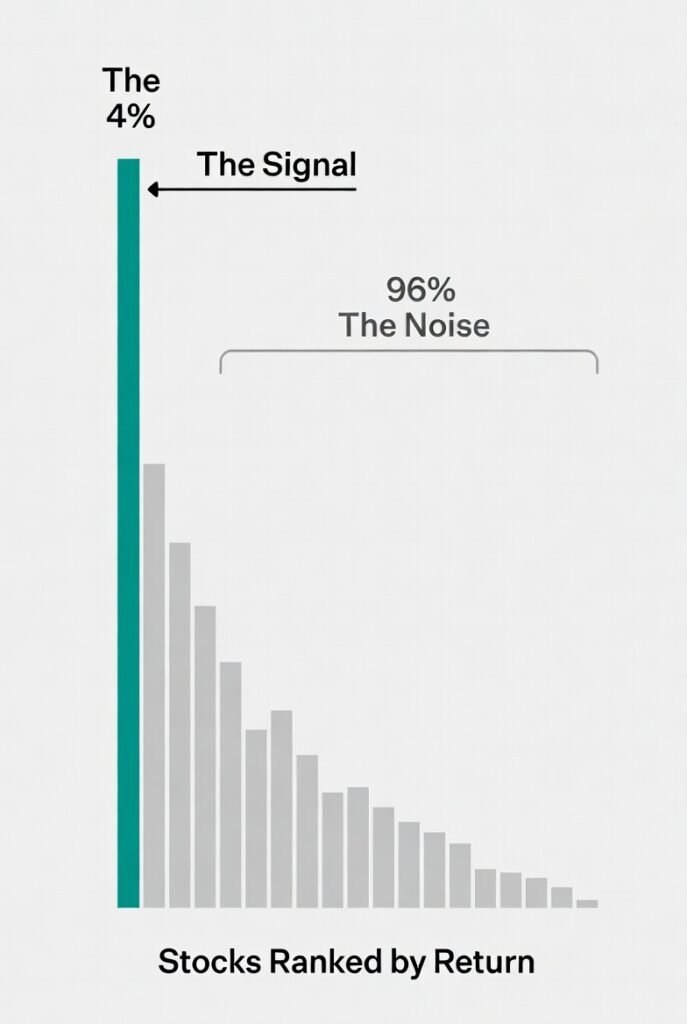
Diversification is a hedge against ignorance. If you don’t know which companies will win, buy everything. But that means you’re also buying the 96% of stocks that create zero wealth. Research shows the top 4% of companies drive 100% of market returns. We isolate those names through deep research—founder alignment, real moats, cash flow discipline. Holding around 12 high-conviction positions beats owning 500 companies where 480 are dead weight.
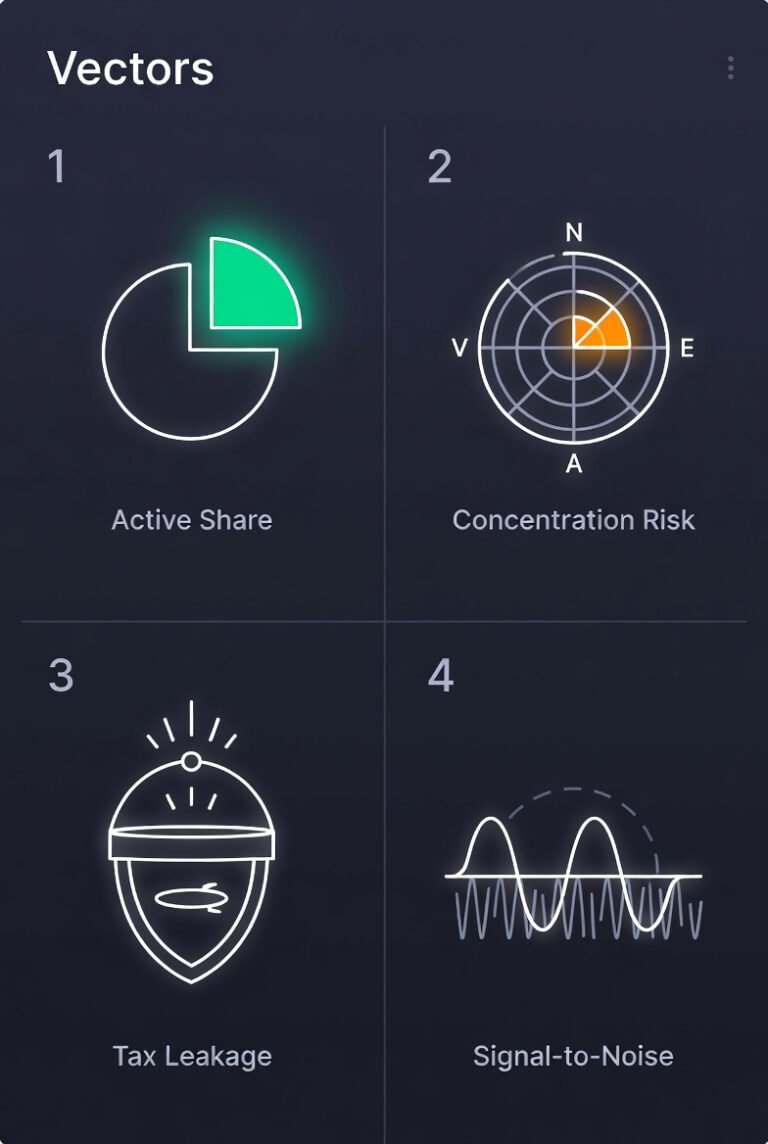
It’s a 30-minute analysis that X-rays your portfolio. We measure four things: True Active Share (are you paying for differentiation or buying the index twice?), Concentration Risk (is 40% sitting in your employer’s stock?), Tax Leakage (where you’re losing five to six figures annually), and Signal-to-Noise Ratio (are low-impact holdings drowning your best ideas?). You get data, ranked action items, and a debrief. No pitch. Most people discover they’re paying fees for exposure they already own elsewhere.
Index funds own everything—the winners and the losers. QQQ holds 100 stocks; the top 10 do all the work, and the other 90 dilute your returns. Index funds also stay 100% invested regardless of valuation. We hold cash when stocks are expensive and deploy when they’re cheap. During the 2025 tariff correction, we cut volatility by 50% while the index took full damage. Our Return-to-Drawdown Ratio is 3.37 versus the S&P’s 1.19. We aim for better returns with less pain.
Founders have skin in the game that hired executives don’t. Research from Bain shows founder-CEOs outperform professional managers by 3.1x over time. Jensen Huang still runs NVIDIA after 30 years because it’s his life’s work, not a résumé line. Mark Zuckerberg controls Meta through voting shares—he can’t be fired by a board chasing short-term numbers. Hired CEOs optimize for their next job. Founders optimize for the next decade.
Diversification is often just a fancy word for not knowing what you own. We don’t hedge by buying 500 mediocre companies; we hedge by knowing our companies better than anyone else. We focus on businesses with founder-led vision and deep moats. The result? Since 2022, we’ve captured more upside while actually reducing volatility exposure during drawdowns.
Because that’s lazy risk management. You don’t fix concentration by running away from growth—you fix it by being intentional. If you work at NVIDIA, we won’t buy more NVIDIA. But we will buy companies with similar quality: founder-led, real moats, strong cash flow. The goal is to keep your wealth compounding without doubling down on your employer. Bonds at 3% don’t move the needle when you’re still building wealth. They’re for people who’ve already won and just need to preserve.
An index fund rides the market all the way down because it has to—it’s fully invested at all times. We don’t have that handicap. If valuations get stupid or the macro environment breaks, we can—and do—raise cash. We treat cash as an active position, waiting to deploy it when excellent assets go on sale.